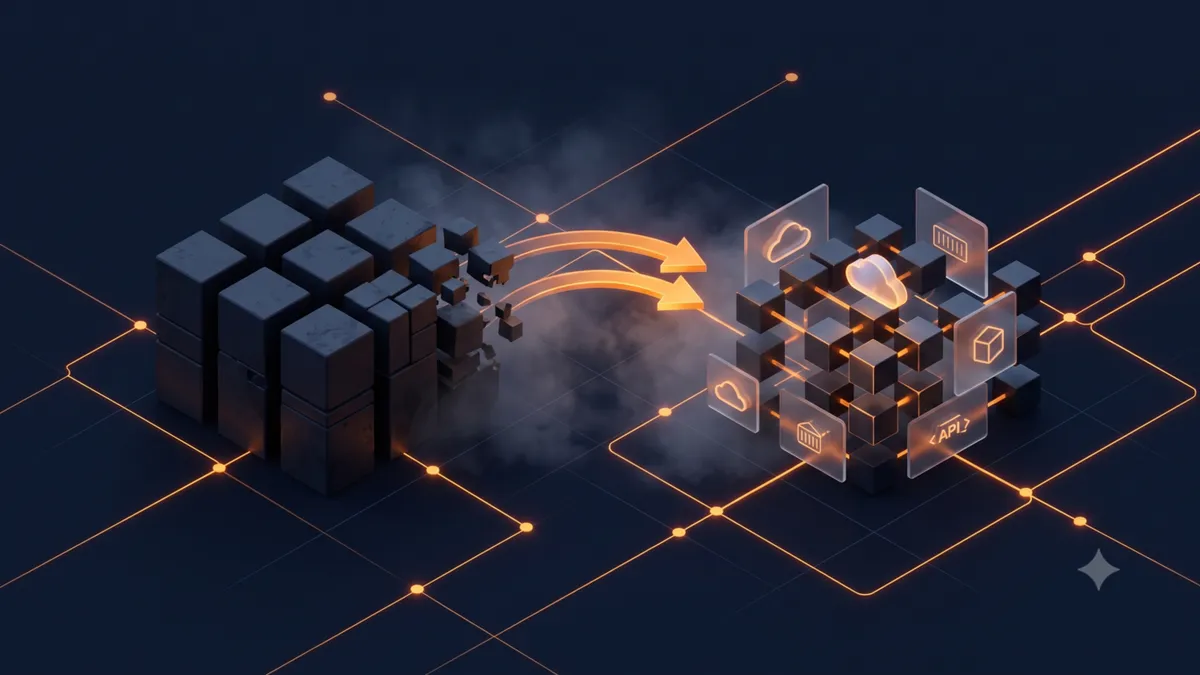
How much does a two-day fix cost when it takes two months to ship? That’s usually the real cost of a legacy system — not one catastrophic failure, but years of accumulated caution nobody priced in. We rebuild the foundation underneath the parts still worth keeping, in phases the business can absorb, instead of betting everything on a single rewrite.
Service
Software Modernization
Rearchitecting legacy systems without stopping the business that depends on them.
Overview
Challenges
Business challenges we solve
A system too critical to touch and too fragile to trust
Every change carries outsized risk, so most changes just don't happen.
Original developers and documentation long gone
The people who understood the system left years ago, and nothing was written down.
Every new feature takes longer than the last
Technical debt compounds until simple requests take months instead of days.
Capabilities
Our capabilities
Legacy system assessment
Understanding what a system actually does — including the undocumented parts — before changing anything.
Incremental modernization
Phased rearchitecture that keeps the system running throughout, not a big-bang rewrite and a prayer.
Data migration & platform upgrades
Moving decades of data and business logic onto current infrastructure without losing either.
Approach
Our delivery approach
Stack
Technologies & platforms
Backend
Cloud platforms
Databases
Engagement
Engagement models
Fixed scope
Defined project
An agreed end state, timeline, and cost for a scoped migration.
Best for a scoped migration with a defined end stateTime & material
Flexible scope
Modernization work billed against actual effort as the assessment reveals what's needed.
Best when the full scope isn't knowable up frontDedicated team
Embedded capacity
A team embedded across a multi-year modernization effort.
Best for a multi-year modernization programProof
FAQ
Frequently asked questions
Rarely, and we'll tell you if that's genuinely the right call. Most legacy systems have logic worth keeping — the goal is usually a new foundation under the parts that still work rather than a full replacement.
That's the default we plan around from day one. Phased migrations validated against a shadow environment are how we avoid a single high-risk cutover.
Yes — we start with an honest assessment of what's there before proposing next steps, rather than assuming the prior approach was wrong.